November 03, 2026 · Admin
Clean Haircare for a Healthier-Looking Scalp
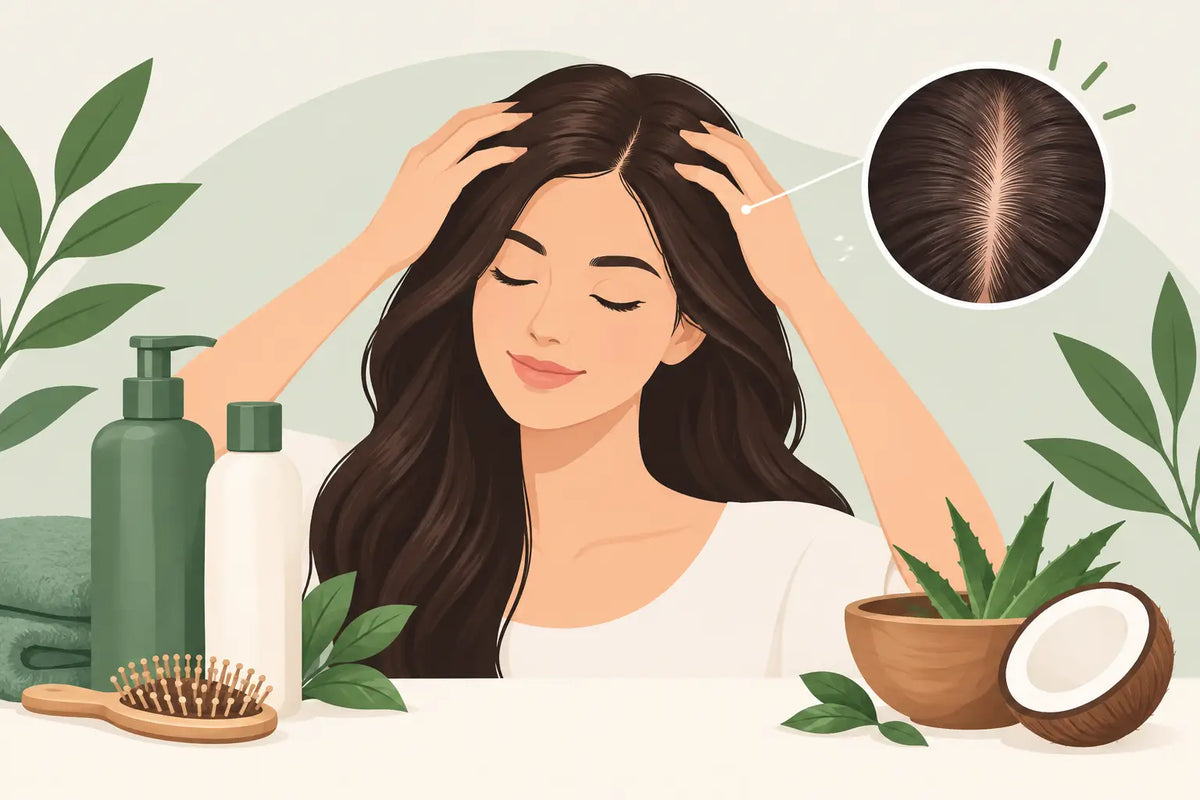
A scalp tonic should not make the rest of your day feel like a compromise. If it leaves roots oily, weighs down fine hair, or turns a simple routine into a long cleanup, consistency becomes difficult. Clean haircare offers a more considered approach: formulas designed around scalp comfort, ingredient transparency, and a finish that works with real life.
For anyone noticing less volume at the roots, a drier-feeling scalp, or hair that simply looks less dense than it used to, the goal is not a dramatic overnight promise. It is a daily routine that helps the scalp feel balanced and supports the appearance of fuller, thicker-looking hair over time.
What Clean Haircare Actually Means
“Clean” is widely used in beauty, but it is not a regulated scientific standard. That means the term is most useful when a brand explains what its formula includes, what it leaves out, and why those choices matter for daily use.
In scalp care, clean haircare often points to a formula made without ingredients many consumers prefer to avoid, such as heavy oils, silicones, parabens, drying alcohols, or unnecessary additives. But a short “free-from” list is not the whole story. A thoughtful formula should also have a clear purpose: to hydrate the scalp, maintain a comfortable skin barrier, and create a fresh foundation for healthier-looking hair.
The best clean routines are not built on fear of ingredients. They are built on fit. If a product feels pleasant, absorbs quickly, and layers easily into a morning or evening routine, it is far more likely to become a consistent habit.
Why the Scalp Belongs at the Center of Hair Care
Hair may be the visible result, but the scalp is where the daily environment around each hair root begins. Like the skin on your face, scalp skin can be affected by dryness, product buildup, environmental stress, frequent washing, and changes in routine. When it feels uncomfortable or overloaded, hair can be harder to style and may appear flatter or less polished at the root.
This is why shampoo alone is not always the full answer. Shampoo is designed primarily to cleanse and rinse away. A leave-on scalp product has a different role: it can deliver lightweight hydration and targeted cosmetic ingredients directly where they are needed, without asking you to overhaul your entire hair routine.
For people with fine hair or naturally oil-prone roots, texture matters as much as the ingredient list. Heavy oils may suit some hair types, especially those with very dry lengths, but they can leave others with limp roots or a greasy finish. A water-light tonic can be the more practical choice when the aim is scalp vitality without sacrificing movement, volume, or a freshly washed feel.
The Ingredients That Make a Daily Formula Feel Considered
A strong ingredient-led scalp formula does not need to be complicated. It needs ingredients that work together in a way that makes sense for regular use.
At RIBOREGEN, the formula is powered by 1% 2-Deoxy-D-Ribose, also known as 2dDR. This next-generation ingredient is used to support a healthier-looking scalp environment around the hair roots, bringing a science-inspired focus to a cosmetic daily-care ritual. It is paired with familiar skin and scalp-care ingredients chosen for comfort, hydration, and a refreshed feel.
Caffeine is valued in scalp formulas for its energizing, fresh-feeling profile. Niacinamide supports the look of balanced, healthy skin and can be especially appealing for those whose scalp feels easily stressed by seasonal changes or frequent styling. Dexpanthenol, a form of provitamin B5, helps support hydration and softness, while rosemary extract adds a botanical element associated with a revitalized scalp-care experience.
No individual ingredient should carry the entire story. The real advantage comes from a well-designed formula, a pleasant texture, and the willingness to use it consistently. A tonic that disappears into the scalp cleanly is more useful than an impressive-sounding formula that sits untouched in a bathroom cabinet.
What to Look for in Clean Haircare
A clean formula should suit your lifestyle as well as your preferences. Start by considering how your scalp and hair behave on an ordinary weekday, not just after a salon appointment. Do your roots become oily quickly? Does your scalp feel tight after washing? Do styling products build up easily? Do you avoid scalp treatments because you do not want to lose volume?
Those answers can guide the texture you choose. Lightweight, oil-free leave-on products are often a natural fit for people who want to care for the scalp without changing how their hair looks or feels. They can be applied precisely along the part line or across areas where the scalp needs extra attention, then left to absorb before styling.
It is also worth reading beyond the front label. Look for a transparent ingredient story, clear directions, and claims that stay grounded in cosmetic benefits. Language around scalp comfort, hydration, non-greasy texture, and fuller-looking hair is more useful than vague promises with no explanation of the formula behind them.
Clean does not have to mean minimal in every sense. Botanical extracts, performance-minded cosmetic actives, and effective humectants can all have a place in a modern formula. What matters is that they are selected thoughtfully and presented honestly.
How to Build a Routine You Will Actually Keep
The most effective daily scalp-care ritual is usually the one that creates the least friction. Apply a lightweight tonic to a clean, dry, or towel-dried scalp according to product directions. Use the applicator to distribute it where you want support, then massage gently with your fingertips. The goal is not aggressive rubbing. A brief, comfortable massage helps turn application into a small act of self-care.
A morning application can work well for people who appreciate a fresh scalp feel before styling. An evening application may be easier for those who prefer to add it after their nighttime skincare routine. There is no universal best time. The better choice is the one you can repeat without effort.
Keep the rest of the routine equally realistic. Use a shampoo that cleanses your scalp without leaving it stripped, condition the mid-lengths and ends as needed, and be mindful of how much styling product accumulates at the roots. If you use heat tools, avoid applying a leave-on scalp product immediately before intense heat unless the product directions specifically say it is suitable.
Consistency matters because the cosmetic benefits of scalp care are cumulative in feel and appearance. A hydrated, comfortable scalp and a non-greasy root area can make hair easier to manage and help it look more polished, lifted, and healthy day after day.
A Cleaner Approach Without the All-or-Nothing Mindset
Choosing clean haircare does not require replacing every product you own at once. It can begin with the product closest to the scalp, where texture and daily wearability matter most. For many people, that means swapping a heavy, messy treatment for a lightweight tonic that feels refined enough to use every day.
There are trade-offs to consider. Oil-rich treatments can feel deeply conditioning on dry hair lengths, while a light tonic is better suited to targeted scalp care. Fragranced products can make a routine feel more luxurious, though people with a sensitive-feeling scalp may prefer a simpler sensory experience. The right choice depends on your hair type, routine, and what makes you feel comfortable using a product consistently.
A clean routine is not about chasing perfection. It is about choosing formulas that respect your preferences, support scalp comfort, and make confidence through consistency feel attainable. When scalp care feels light, elegant, and easy to repeat, it has a much better chance of becoming part of the way you care for yourself.
This article is for general information about cosmetic scalp care and is not medical advice.