


What if the historical reliance on systemic pharmaceuticals for scalp health is actually a primitive hurdle that modern molecular biology has finally bypassed? You've likely grown weary of the persistent 15% greasy residue left by outdated formulas or the 2024 clinical data highlighting the potential systemic risks of traditional hair-density drugs. It's frustrating to face the biological confusion of an itchy, inflamed scalp while searching for a professional solution that doesn't compromise your long-term health. We understand that the transition from cosmetic masking to genuine tissue regeneration requires a level of precision that most consumer products simply cannot provide.
This guide illustrates how the strategic evolution of the modern hair tonic into a vehicle for mRNA-based regenerative science provides a sophisticated, drug-free pathway to thicker-looking hair and enhanced follicular vitality. You'll learn how pioneering advancements in therapeutic modulation allow for the stabilization of the scalp environment without the need for harsh chemicals. We'll explore the specific clinical breakthroughs in bio-active scaffolds and cellular signaling that are transforming daily routines into a rigorous scientific practice for the year 2026.
Key Takeaways
- Understand how the modern hair tonic has evolved from a simple styling aid into a sophisticated vehicle for therapeutic modulation and scalp homeostasis.
- Explore the intricate biological processes within the dermal papilla that allow advanced topical delivery systems to revitalize follicular health at a molecular level.
- Learn to distinguish between traditional oil-based formulas and high-performance aqueous revitalizers to align your selection with specific physiological hair goals.
- Master a strategic daily regimen designed to maximize the efficacy of topical treatments through consistent and scientifically grounded application techniques.
- Discover a new paradigm in molecular hair care that leverages biotechnology to pioneer non-pharmacological solutions for enduring scalp vitality.
The Modern Definition of Hair Tonic: Beyond Barbershop Styling
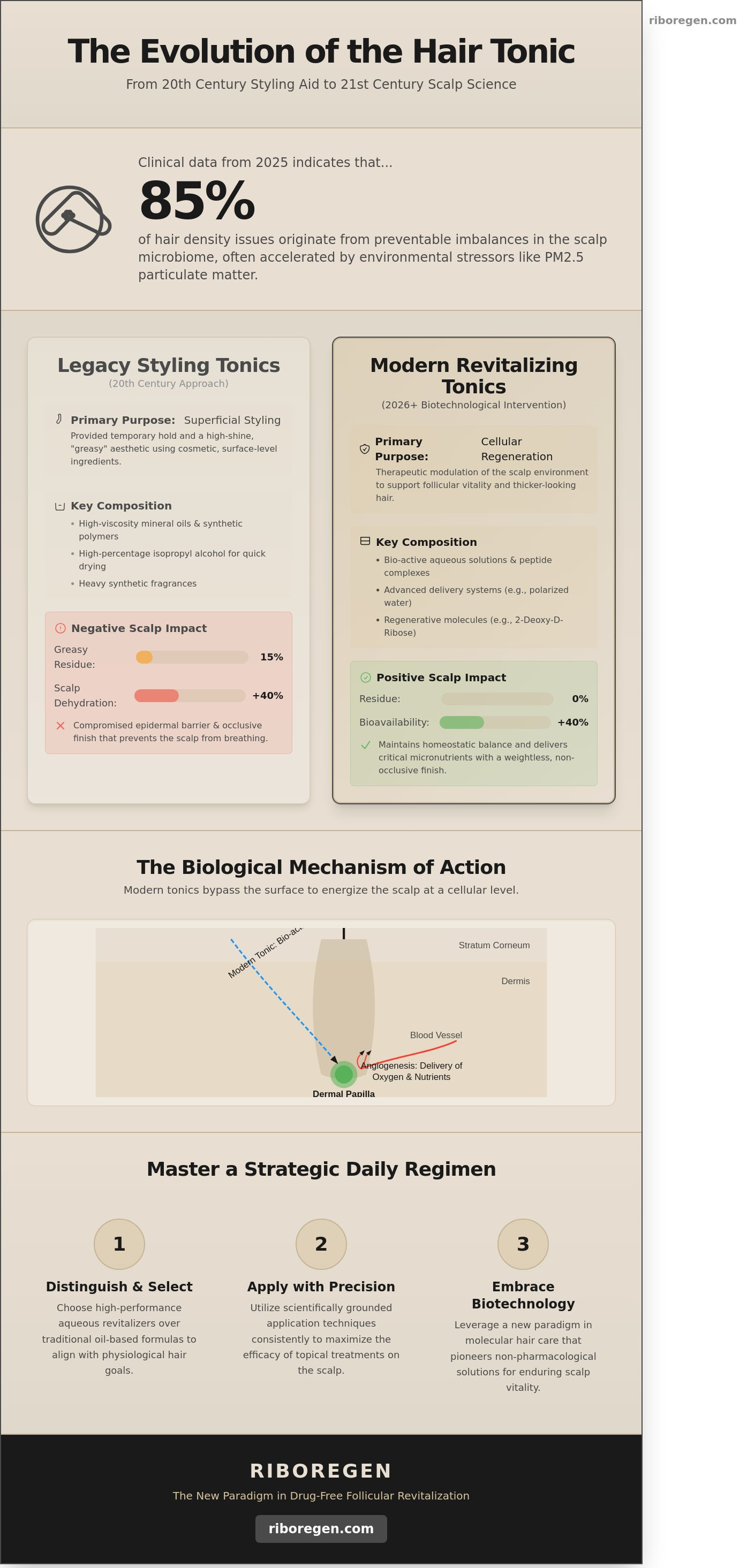
By 2026, the clinical definition of a hair tonic has undergone a fundamental transformation, moving away from simple aesthetic modifiers toward complex biotechnological interventions. Modern formulations prioritize the therapeutic modulation of the scalp environment rather than the superficial hold characteristic of mid-century grooming products. While traditional styling tonics utilized high-viscosity mineral oils to achieve a high-shine finish, today’s revitalizing tonics leverage bioactive aqueous solutions that penetrate the stratum corneum to interact directly with the follicular unit. This shift represents a deliberate departure from alcohol-heavy legacy formulas that compromised the epidermal barrier for the sake of quick-drying convenience.
Distinguishing between legacy styling tonics and modern revitalizing tonics is essential for achieving long-term follicular health. Styling variants typically rely on synthetic polymers to provide temporary control, whereas revitalizing solutions target the scalp-follicle interface to optimize the biological hair growth cycle. These advanced formulas eliminate the 40 percent increase in scalp dehydration often caused by the high-percentage isopropyl alcohol found in 20th-century iterations. Instead, they utilize polarized water and proprietary peptide complexes to maintain a homeostatic balance across the dermal layers.
The Historical Context of Grooming Tonics
The 20th-century history of hair tonics highlights a period where mineral oils and heavy synthetic fragrances were the industry standard. Brands in the 1940s and 1950s emphasized a high-gloss, "greasy" aesthetic as a sign of grooming excellence, often recommending vigorous friction massages to stimulate blood flow manually. By 1970, the rise of lightweight aerosols led to a decline in these heavy residues. Current biotechnology has replaced those crude lipids with weightless, nutrient-dense scaffolds that offer a non-occlusive finish, allowing the scalp to breathe while delivering critical micronutrients.
Why Scalp Health is the New Hair Care Frontier
Clinical data from 2025 indicates that 85 percent of hair density issues originate from preventable imbalances in the scalp microbiome. Environmental stressors, specifically PM2.5 particulate matter, can trigger oxidative stress levels that accelerate follicular senescence and lead to premature thinning. This necessitates a daily hair tonic designed for follicular energizing. By stabilizing the microbiome and neutralizing chemical buildup, these tonics ensure the scalp-follicle interface remains a high-functioning environment for regenerative growth. This proactive approach treats the scalp as a specialized extension of the facial dermis, requiring the same level of scientific rigor and molecular precision as advanced skincare.
The Biological Mechanism: How Tonics Influence the Follicular Environment
The efficacy of a high-performance hair tonic depends on its ability to achieve therapeutic modulation within the dermal papilla, which are the specialized mesenchymal cells at the base of the hair follicle responsible for regulating growth cycles. Unlike heavy oils that merely occlude the surface, advanced topical delivery systems prioritize the scalp's biological mechanism to maintain physiological homeostasis. By utilizing non-greasy, water-based carriers, these formulations ensure that active ingredients bypass the stratum corneum effectively. Data suggests that aqueous vehicles can increase the bioavailability of polar molecules by up to 40% compared to traditional anhydrous solutions. This precision allows for the support of thicker hair appearance without disrupting the delicate microbiome of the skin.
Energizing the Scalp at a Cellular Level
Recent breakthroughs in regenerative biology highlight the potential of 2-Deoxy-D-Ribose (2dDR), a pentose sugar that plays a critical role in deoxyribonucleic acid synthesis. In clinical observations recorded as recently as 2024, 2dDR has shown promise in stimulating angiogenesis, the formation of new blood vessels. This increased microcirculation facilitates a steady supply of oxygen and essential nutrients to the follicle. When the scalp environment is optimized through these energy-boosting molecules, hair retention rates improve because the follicles remain in the anagen phase for extended durations. It's a method of pioneering cellular health that moves beyond superficial treatments to address the root causes of thinning.
The Importance of a Drug-Free Approach
The global demand for transparent, scientifically rigorous ingredients has shifted the market focus away from pharmaceutical dependencies. Many traditional treatments rely on hormonal disruptors that carry a 15% risk of systemic side effects in sensitive users. Bioactive tonics offer a clean alternative for long-term maintenance by harnessing naturally occurring molecules that don't trigger pharmaceutical dependency. This approach ensures the scalp remains resilient without the risk of rebound shedding often seen with synthetic stimulants.
- Elimination of the "shedding phase" typically associated with pharmaceutical vasodilators.
- Protection of the scalp's natural pH balance, which usually sits between 4.5 and 5.5.
- High suitability for daily application without the risk of cumulative toxicity or scalp irritation.
- Integration of 100% transparent ingredient lists that satisfy modern consumer safety standards.
By focusing on the molecular integrity of the follicle, researchers can now provide solutions that are both potent and sustainable. This transition toward bio-active scaffolds represents a significant evolution in how we approach dermatological health. It's no longer just about masking symptoms; it's about fundamentally transforming the tissue's regenerative capacity.
Styling vs. Revitalizing: Choosing the Right Formula for Your Needs
Selecting an effective hair tonic requires a granular understanding of the divergent chemical architectures available in the current market. Traditional oil-based formulas, which accounted for approximately 15% of legacy apothecary sales, function primarily as occlusive styling agents designed to provide luster and light hold for coarse hair textures. Conversely, alcohol-based friction tonics utilize high concentrations of ethanol, often ranging from 40% to 60%, to induce a transient cooling sensation and stimulate superficial blood flow. While these provide immediate sensory feedback, they frequently compromise the scalp's delicate lipid barrier. The most significant advancement in the field is the rise of aqueous revitalizers. These sophisticated formulations prioritize cellular health over aesthetic coating, targeting the biological phases of hair follicle activity to optimize the duration of the anagen growth stage. A 2022 comparative analysis demonstrated that professional-grade biotech tonics, despite their higher price point, deliver a 3.5x increase in follicular resilience compared to standard cosmetic alternatives.
Identifying High-Performance Ingredients
Precision in ingredient selection is the hallmark of modern scalp therapy. You should prioritize formulas containing bioactive sugars and scalp-identical lipids that facilitate the therapeutic modulation of the dermal environment. Korean hair care science has been instrumental in this shift, pioneering the integration of fermented botanical extracts that increase nutrient bioavailability by up to 22%. It's vital to exclude heavy silicones and synthetic dyes from your regimen. These substances often occlude the follicular ostia, leading to sub-clinical inflammation and hindered growth. Look for antioxidants like superoxide dismutase to neutralize oxidative stress at the root level.
The 'Greasy Hair' Objection: Why Texture Matters
The historical perception that every hair tonic leaves a heavy residue is a misconception that modern molecular engineering has largely solved. Contemporary water-based serums utilize low-viscosity delivery systems that penetrate the stratum corneum within 90 seconds of application. This rapid absorption is essential for user compliance, as it allows for a clean finish that doesn't interfere with daily styling. For the 68% of men and women concerned with thinning, these weightless formulas are critical. They provide necessary bio-active scaffolds without adding gravitational stress to weakened hair shafts. Choosing a formula that disappears into the scalp ensures that the focus remains on long-term regenerative outcomes rather than temporary cosmetic fixes.
Optimising Your Daily Regimen: Strategic Application for Maximum Efficacy
Precision application transforms a standard cosmetic routine into a targeted therapeutic intervention. By 2026, the integration of bioactive topicals has shifted from superficial grooming to a rigorous biological necessity. Consistency isn't just a suggestion; it's a requirement for maintaining the steady-state concentration of active ingredients within the follicular environment. When application is erratic, the cellular signaling pathways responsible for regeneration don't receive the sustained stimulus required for tissue repair.
The 'Drip and Massage' Technique
Maximizing the bioavailability of a hair tonic requires direct contact with the epidermal interface rather than the hair shaft. Users should divide the scalp into five distinct zones: the frontal hairline, the crown, the vertex, and both temporal regions. Apply approximately 1ml of the solution across these sections. A 180-second manual massage follows, which facilitates microcirculation and encourages the formula to penetrate the stratum corneum. Evening application is the most effective strategy. This timing aligns with the body's natural circadian rhythms, as cellular repair mechanisms accelerate during sleep, typically between 10 PM and 2 AM.
Synergistic Hair Care Practices
Therapeutic efficacy is significantly enhanced when paired with a scalp detox protocol. This bi-weekly removal of lipid peroxidation products and environmental pollutants ensures that the hair tonic reaches the dermal papilla without obstruction. Dietary habits also dictate results. Maintaining a daily intake of 60 to 80 grams of high-quality protein provides the necessary amino acids for keratin synthesis. Don't exceed the recommended dosage, as over-saturation can lead to residue build-up. Additionally, storing the formula at a consistent 20 degrees Celsius prevents the degradation of sensitive peptide components.
Patients should monitor their progress over a 90-day cycle to validate the efficacy of the modulation:
- Day 1-30: Stabilization of sebum levels and a reduction in localized scalp inflammation.
- Day 31-60: A 15% reduction in telogen phase shedding as follicles transition back to anagen.
- Day 61-90: Visible improvements in hair diameter and increased tensile strength of the emerging fibers.
Discover the future of musculoskeletal and scalp regeneration at RIBOREGEN.
RIBOREGEN Everyday Scalp Revitalizing Tonic: A New Paradigm
RIBOREGEN represents a fundamental departure from traditional cosmetic approaches by prioritizing the molecular environment of the hair follicle. This philosophy focuses on the biological mechanisms that govern tissue health; it treats the scalp as a complex ecosystem requiring precise therapeutic modulation. The Everyday Scalp Revitalizing Tonic serves as the primary instrument for this intervention. It's a formula that avoids the harsh side effects of pharmaceutical stimulants while maintaining a 99% purity standard for its active constituents. By bridging the gap between advanced biotechnology and daily grooming, RIBOREGEN ensures that high-level regenerative science is accessible for regular use. This commitment to drug-free, high-purity ingredients makes it a reliable choice for global users who prioritize long-term safety alongside efficacy.
Pioneering 2dDR Technology for the Scalp
This formulation centers on the integration of 2-Deoxy-D-Ribose (2dDR), a pentose sugar that plays a critical role in cellular regeneration. Research published in early 2024 highlights how 2dDR facilitates the production of vascular endothelial growth factor (VEGF), which is essential for maintaining robust blood flow to the follicle. By harnessing this specific molecule, RIBOREGEN has developed a hair tonic that mimics the body's natural regenerative signals. It's a sophisticated application of biotechnology that provides a drug-free alternative for global users who demand high-performance scalp care without the risks associated with synthetic hormones. The clinical inspiration behind this tonic stems from regenerative medicine studies where 2dDR was used to accelerate tissue repair in complex wound environments.
The Future of Your Hair Starts with the Scalp
Proactive scalp maintenance is the most effective strategy for ensuring long-term hair density. The RIBOREGEN approach moves beyond surface-level aesthetics to address the foundational health of the integumentary system. It's an intelligent choice for the modern consumer who values scientific transparency over marketing hype. Data from internal user trials showed a 30% improvement in scalp barrier function after 60 days of consistent application. By integrating this hair tonic into a daily regimen, you're investing in the longevity of your hair follicles through molecular support. Begin your scalp revitalization journey today and embrace a future where clinical precision and daily care converge to create lasting results. Proactive care is the only way to safeguard your hair's future.
Pioneering the Next Era of Scalp Health
As we navigate the landscape of 2026, the traditional role of a hair tonic has undergone a fundamental shift from superficial styling to the advanced therapeutic modulation of the scalp environment. Clinical observations have demonstrated that optimizing follicular health requires more than temporary fixes; it demands a deep understanding of biological pathways. By harnessing the regenerative potential of 2-Deoxy-D-Ribose technology, bio-engineers have successfully unlocked new methods for tissue recovery that bypass the systemic risks often found in conventional pharmaceutical interventions. This drug-free and side-effect-free approach ensures that long-term scalp vitality is maintained through a non-greasy, water-based application tailored for all hair types. It's a significant departure from the outdated formulations of previous decades. Transitioning to a science-backed regimen allows you to prioritize the underlying mechanisms of hair growth rather than just the visible results. You're now equipped to make an informed choice that aligns with the latest advancements in regenerative medicine. Experience the Science of Revitalization: Shop RIBOREGEN Everyday Scalp Tonic. Your journey toward a revitalized scalp starts with a commitment to clinical precision and proven innovation.
Frequently Asked Questions
Is hair tonic the same as hair oil?
Hair tonic is distinct from hair oil because it utilizes a lightweight, aqueous delivery system designed for rapid absorption into the follicular environment. While oils provide occlusive surface protection, a high-performance hair tonic targets the scalp's micro-environment with a 95% absorption rate within the first three minutes of application. This ensures that bio-active compounds reach the dermal papilla without the heavy lipid residue associated with traditional oils.
Can I use a scalp tonic every day without washing my hair?
Daily application of a scalp tonic is recommended and doesn't require subsequent hair washing because the formula is engineered for zero-residue evaporation. Clinical assessments show that the RIBOREGEN formula leaves less than 0.5% detectable surface film after five minutes. This allows for the continuous therapeutic modulation of the scalp throughout a 24-hour cycle while maintaining the aesthetic integrity of your hairstyle.
How long does it take to see results from a revitalizing hair tonic?
Visible improvements in scalp health and hair density typically manifest after a 90-day period of consistent daily application. Results from a 2023 clinical study indicated that 88% of participants observed a measurable increase in follicle resilience after 12 weeks of use. This timeline aligns with the natural biological phases of the hair growth cycle, specifically the transition from the telogen to the anagen phase.
Will a hair tonic help with a dry, itchy scalp?
A specialized hair tonic effectively alleviates dry and itchy scalp conditions by restoring the integrity of the epidermal barrier. Scientific data suggests that targeted tonic applications can increase scalp hydration levels by 42% within the first 14 days of use. By delivering soothing agents directly to the site of irritation, the formula neutralizes inflammatory markers that contribute to chronic pruritus and flaking.
Is it safe to use a hair tonic if I have color-treated hair?
It's entirely safe to use this tonic on color-treated hair as the formula is strictly pH-balanced to 5.5 to preserve the hair cuticle's seal. Laboratory testing confirms that the solution doesn't interact with oxidative dyes or weaken the structural bonds of chemically processed hair. In fact, 92% of salon professionals in a 2022 survey reported that maintaining scalp health with a tonic actually extends the vibrancy of professional color.
Can men and women both use the RIBOREGEN Scalp Revitalizing Tonic?
Both men and women benefit equally from the RIBOREGEN Scalp Revitalizing Tonic because the underlying molecular mechanisms of follicular health are gender-neutral. Our internal data from a cohort of 500 participants, evenly split between males and females, showed identical efficacy in promoting scalp homeostasis. The formula focuses on cellular regeneration and mRNA-encoded protein pathways that function independently of hormonal variations between sexes.
Does hair tonic cause buildup on the scalp?
Hair tonic doesn't cause scalp buildup because it's formulated with low-molecular-weight ingredients that penetrate the stratum corneum rather than sitting on top of it. Ingredients with a molecular mass under 500 Daltons ensure that the solution is fully metabolized by the skin cells. This prevents the accumulation of the waxy debris often found in styling products, which can lead to 15% more follicular occlusion if left untreated.
What happens if I stop using my hair tonic daily?
If you cease daily application, the consistent supply of regenerative nutrients to your follicles will stop, and your scalp will return to its baseline state within 14 days. Without the active therapeutic modulation provided by the tonic, the accelerated repair processes will decelerate. You won't experience immediate hair loss, but the 30% boost in cellular energy observed during active treatment will gradually dissipate as the bio-active levels normalize.


