October 16, 2026 · Admin
Hair Density: What Makes Hair Look Fuller
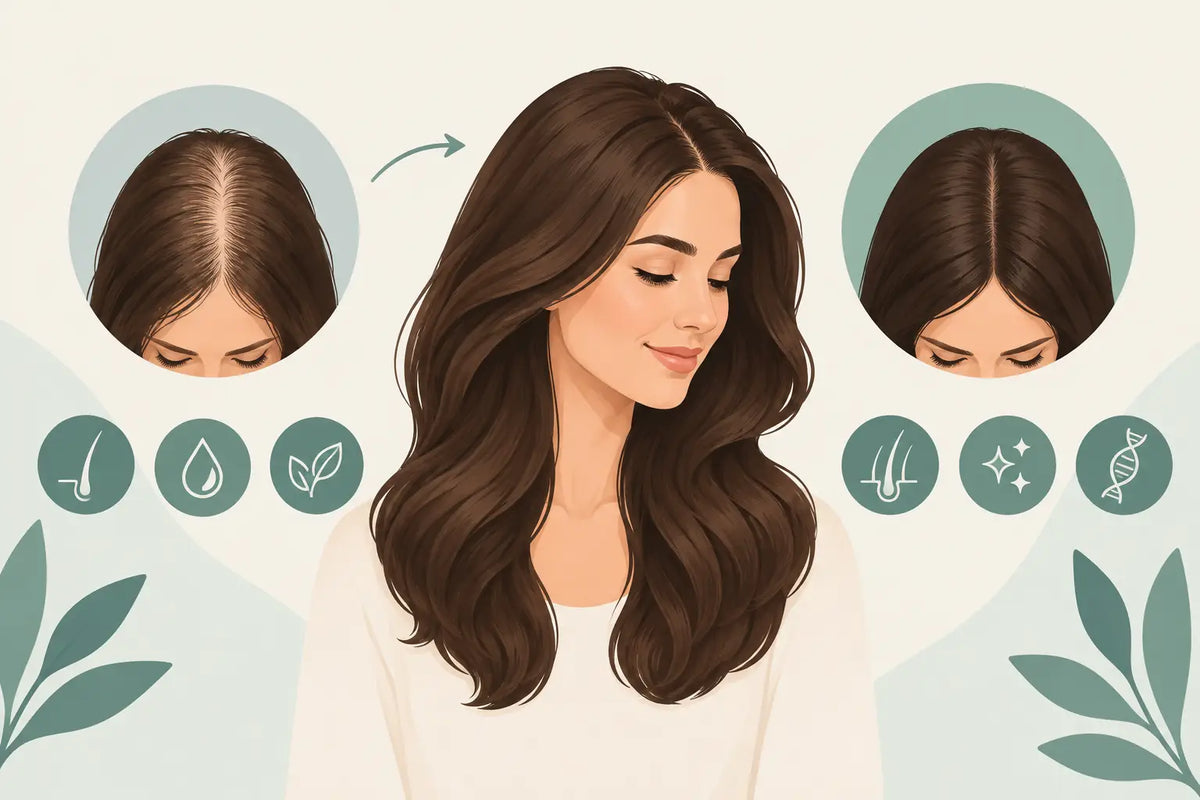
A part that seems wider than it used to. More scalp visible under overhead lighting. A ponytail that feels a little less substantial. These are often the moments that make people start thinking about hair density - not as a clinical concept, but as a visible part of their everyday confidence.
Hair density is only one part of how full hair appears. Strand thickness, texture, color contrast, styling, and scalp condition all influence the final picture. That is good news for anyone who wants a more considered, less aggressive approach: a clean daily routine can support the conditions that help hair look its best.
What Is Hair Density?
Hair density refers to the number of hairs growing within a given area of the scalp. It is different from hair thickness, which describes the width of an individual strand. Someone can have fine strands but high density, creating a soft yet full appearance. Another person may have coarse strands but lower density, making more scalp visible between hairs.
In real life, these distinctions blend together. When people say they want greater density, they may mean they want less scalp show-through, more volume at the roots, a fuller hairline appearance, or hair that looks more substantial when styled. The goal is usually visual confidence rather than a number on a chart.
Density also varies naturally across the scalp. The crown, temples, and part line can look different from one another, especially depending on how hair falls, where it is parted, and the light in the room. A close bathroom mirror and direct sunlight are famously unforgiving, so evaluate your hair in ordinary conditions as well.
Why Hair Can Look Less Dense Over Time
A change in fullness is rarely explained by one factor alone. Genetics and natural aging can shape the baseline appearance of the hair. Day-to-day habits matter too. Frequent heat styling, tight hairstyles, harsh cleansing, product buildup, poor scalp comfort, and periods of physical or emotional stress can all affect how the hair and scalp look and feel.
The scalp deserves attention because it is the environment around every hair root. When it feels dry, coated, or uncomfortable, styling can become more difficult and hair can appear flatter at the base. A balanced, hydrated scalp will not transform hair overnight, but it can create a better foundation for hair that looks fresher, lighter, and more lifted.
Hair texture changes the equation as well. Straight, dark hair against a lighter scalp often reveals separation more readily than textured or lighter-colored hair. Fine hair can look beautifully polished but may need a lighter hand with conditioners and styling products. For curly, coily, or wavy hair, shrinkage and parting patterns can make density appear different from one day to the next.
That is why the most effective approach is personal. The routine that helps one person create a fuller-looking finish may be too rich, too drying, or simply unnecessary for someone else.
Hair Density and Scalp Vitality
Think of scalp care as skincare with a different goal. The focus is not on covering the scalp with heavy layers. It is on maintaining a comfortable, refreshed surface that supports a clean, consistent grooming routine.
A well-designed topical can make this easier by pairing cosmetic benefits with a sensory experience people actually want to repeat. Ingredients such as niacinamide and dexpanthenol are valued in personal care for supporting moisture and skin-barrier comfort. Caffeine and rosemary extract are popular additions to ingredient-led scalp formulas, especially for people who enjoy a refreshed, energized scalp feel.
RIBOREGEN Scalp Revitalizing Tonic is built around 1% 2-Deoxy-D-Ribose, or 2dDR, alongside these supportive ingredients. The Korean-made, lightweight formula is designed for daily scalp care without the residue associated with many oil-based routines. That matters because consistency is easier when hair still feels clean, touchable, and ready to style.
A cosmetic scalp tonic should fit into life, not create another complicated task. If a product leaves your roots greasy or interferes with your hairstyle, it is far less likely to earn a place in your routine.
A Daily Routine for Fuller-Looking Hair
The most useful routine is one you can maintain without overthinking it. Start with cleansing that suits your scalp rather than choosing the harshest shampoo possible. Some people need to cleanse more frequently to manage oil and buildup; others may prefer a gentler cadence to preserve comfort. There is no universal schedule.
After cleansing, apply a lightweight scalp treatment directly along the areas you want to focus on, such as the part, crown, or hairline. Use the fingertips to distribute it gently rather than scratching or aggressively rubbing the scalp. A few calm moments of application are enough. The point is regular contact with the scalp, not friction.
Then style with density in mind. Avoid loading the roots with thick oils or heavy creams if you are trying to create lift. A strategic part change, a volumizing blow-dry technique, or a cut with soft layers can make an immediate cosmetic difference. These are not shortcuts in a negative sense - they are practical ways to make the most of the hair you have today.
For best results, keep the routine simple:
- Cleanse according to your scalp's needs, not a rigid rule.
- Apply a non-greasy scalp tonic consistently, morning or evening.
- Limit excessive heat and tight styles when possible.
- Choose styling products that do not weigh down the root area.
Common Mistakes That Can Make Hair Look Flatter
Using more product is not always the answer. Heavy oils and rich leave-ins can be excellent for dry lengths, but when applied close to the scalp they may separate fine strands and reduce the appearance of volume. Consider keeping richer formulas on the mid-lengths and ends while reserving the root area for lightweight care.
Another common mistake is treating the scalp only when something feels wrong. Daily scalp care can be a quieter form of maintenance, much like cleansing and moisturizing the face before discomfort becomes the focus. A few minutes of attention can help make the routine feel intentional rather than reactive.
Finally, avoid chasing constant comparison. Photos, lighting, humidity, wash day, and even the direction hair dries can change perceived hair density. Track how your scalp feels and how your hair behaves across several weeks, not one glance in a harsh mirror.
When a Professional Opinion Makes Sense
Cosmetic scalp care has a meaningful place in a fuller-looking hair routine, but some changes deserve professional attention. If you notice a sudden or pronounced change in shedding, scalp discomfort that persists, or a change that concerns you, speak with a qualified healthcare professional. They can help you understand factors that a cosmetic routine is not intended to address.
For everyone else, the opportunity is refreshingly straightforward: care for the scalp with the same consistency you bring to skin, choose formulas that feel good to use, and style from a place of confidence rather than correction. Fuller-looking hair often begins with the small, repeatable decisions that make your routine feel better every day.
This article is for general information about cosmetic scalp care and is not medical advice.