October 15, 2026 · Admin
Scalp Tonic Versus Leave-In: Which Fits?
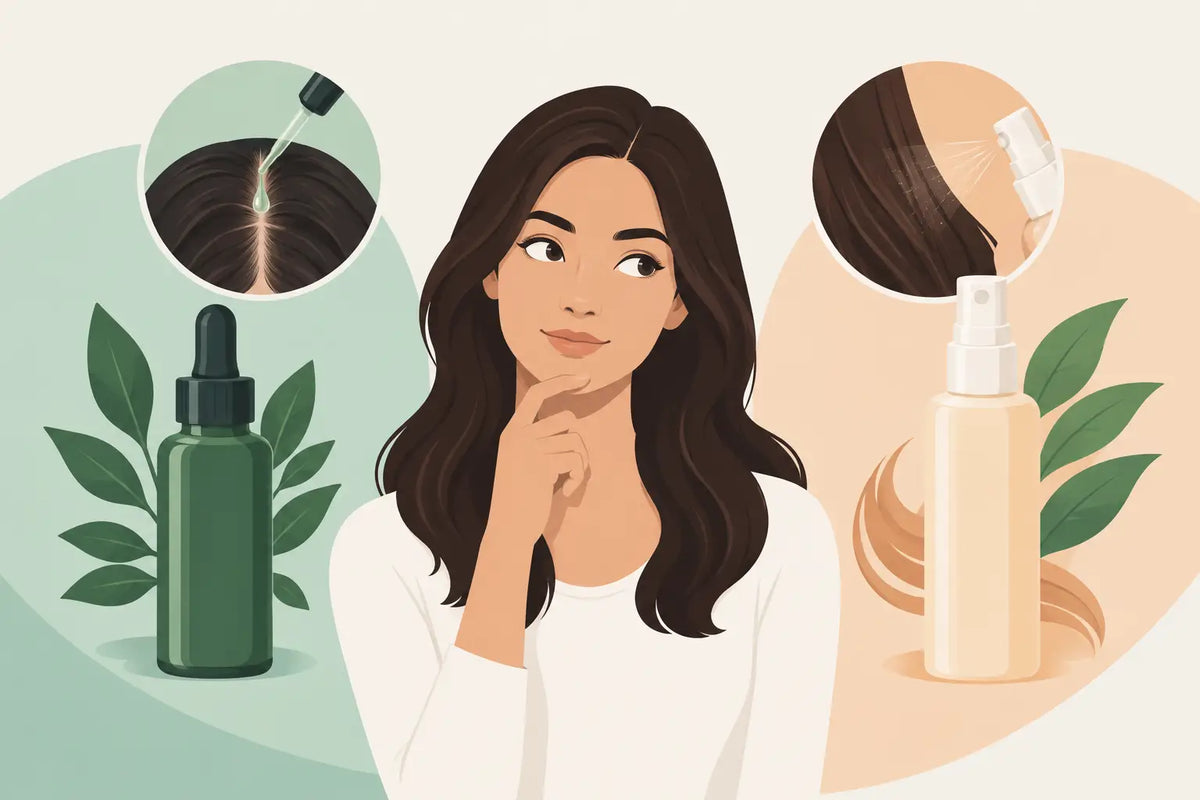
A leave-in can make hair feel softer the moment you style it. A scalp tonic is designed for the skin beneath it - the place where your hair begins. That distinction matters when you are choosing between a scalp tonic versus leave-in product for thinning-looking hair, dryness, or a routine that simply feels more intentional.
Both can have a place on your bathroom shelf. They just solve different cosmetic needs. Understanding where each formula belongs helps you avoid weighed-down roots, under-moisturized lengths, and the common mistake of asking one product to do every job.
Scalp Tonic Versus Leave-In: The Core Difference
The simplest way to compare them is by destination. A scalp tonic is made to be applied directly to the scalp, ideally along the parts and around areas where you want more focused daily care. A leave-in is generally made for the hair fiber itself, from mid-lengths to ends, where it can smooth, soften, detangle, or help hair look more polished.
Your scalp is skin. Like the skin on your face, it benefits from a routine that considers comfort, hydration, and its overall look and feel. Hair lengths, on the other hand, are exposed fibers. They may need conditioning ingredients that improve slip and manageability but would feel too rich if concentrated at the roots.
That is why a scalp tonic often has a fluid, fast-absorbing texture. It should make targeted application easy without disrupting your style or leaving roots oily. A leave-in may be a cream, milk, spray, or serum, with more emphasis on conditioning and styling benefits.
Neither category is inherently better. The right choice depends on whether your primary concern starts at the scalp, along the hair lengths, or both.
What a Scalp Tonic Is Made to Do
A well-designed scalp tonic supports a healthier-looking scalp environment through consistent topical care. It is not a rinse-out conditioner and should not sit heavily on the hair. Instead, its purpose is to deliver lightweight, scalp-focused ingredients close to the roots while keeping the finish fresh and comfortable.
For people noticing reduced density in their part, flatter roots, visible scalp, or hair that looks less full than it once did, the scalp is a logical place to focus. Daily scalp care is also appealing when you want a clean routine that does not rely on greasy oils or complicated steps.
Ingredient selection matters. A formula built around 2-Deoxy-D-Ribose, also known as 2dDR, brings a science-inspired approach to scalp vitality. When paired with caffeine, niacinamide, dexpanthenol, and rosemary extract, it can support scalp comfort, hydration, barrier care, and a refreshed feel. These are cosmetic benefits, but they can make a meaningful difference in how easy it is to stay consistent with your routine.
RIBOREGEN Scalp Revitalizing Tonic is designed around this philosophy. Its Korean-made, oil-free formula is powered by 1% 2dDR and made for daily use, with a lightweight texture that absorbs cleanly rather than coating the roots.
The appeal of a lightweight root-focused formula
Texture is not a minor detail. If a product makes your hair look oily by noon, conflicts with your blowout, or requires you to plan wash days around it, consistency becomes difficult. A non-greasy tonic is easier to use in the morning before styling or in the evening as part of a wind-down routine.
That ease matters for every hair type. Fine hair may be especially sensitive to buildup at the roots, while thicker or textured hair may benefit from a precise applicator that reaches the scalp without requiring a large amount of product. A lightweight tonic can offer targeted care without changing the way your hair moves.
What a Leave-In Does Best
Leave-in products are usually designed to improve the appearance and feel of the hair shaft. They can reduce the dry, rough sensation that follows washing, make detangling easier, support smoother styling, and help lengths look more conditioned.
They are particularly useful if your hair is color-treated, heat-styled, naturally dry, long, or prone to tangling. In these cases, a leave-in can help preserve a soft, healthy-looking finish between wash days. A spray may work well for finer hair, while a cream or richer lotion may suit coarser curls or very dry ends.
The trade-off is that many leave-ins are not intended for direct scalp use. Rich emollients, oils, and film-forming ingredients can be excellent on dry ends but may leave the roots looking flat if applied too generously. That does not make them poor formulas. It simply means they are designed for a different surface.
Some leave-ins are labeled as scalp-safe or multi-use, and those directions should always take priority. Still, if your goal is more focused scalp wellness and fuller-looking hair at the root, a dedicated tonic is usually the more precise choice.
When to Use One, the Other, or Both
Choose a scalp tonic when your priority is your root area: scalp dryness, a less comfortable scalp feel, visible scalp around the part, or hair that looks less lifted and dense at the base. Use it consistently on a clean or dry scalp according to the product directions, concentrating on the areas you want to support.
Choose a leave-in when your priority is the lengths: tangles, frizz, dryness, lack of shine, or styling manageability. Apply it sparingly from the mid-lengths through the ends, where hair usually needs the most conditioning support.
Using both is often the most balanced option. Think of it as skincare for the scalp and conditioning care for the hair. Start with the tonic at the roots, let it settle, then apply your leave-in to the lengths. This approach gives each product a clear role and helps prevent the heavy, coated feeling that comes from applying everything everywhere.
A simple layering routine
After washing, gently towel-dry or allow your hair to air-dry until it is no longer dripping. Apply a scalp tonic directly along several parts, then massage lightly with your fingertips to distribute it across the scalp. There is no need for aggressive rubbing.
Next, apply a small amount of leave-in through the mid-lengths and ends. Use less than you think you need at first, especially with fine or low-density hair. You can always add more to dry ends, but it is harder to remove excess product from the roots without washing again.
On non-wash days, a tonic may still fit comfortably into your routine if its finish is lightweight and the directions allow daily use. Leave-in products may be used as needed, particularly on ends that feel dry or need a little extra polish before styling.
How to Choose Without Overcomplicating Your Routine
Start by looking at where your concern is most visible. If your scalp feels like the missing piece of your hair routine, a tonic is likely the better first addition. If your roots feel fine but your hair looks dry, unruly, or hard to manage, a leave-in may provide the more immediate cosmetic payoff.
Also consider what you will actually use. A shelf full of elaborate treatments is less valuable than one elegant formula that fits naturally into your day. For many people, that means choosing a drug-free, hormone-free scalp tonic with a clean, non-greasy finish, then adding a leave-in only when the lengths need it.
The best routine is rarely about choosing sides. It is about giving your scalp the focused care it deserves while treating the rest of your hair with the softness and protection it needs. Small, consistent choices can make your daily grooming ritual feel calmer, cleaner, and more confidence-building.
This article is for general information about cosmetic scalp care and is not medical advice.